
Urban Enclosure and the Open World
The Caves of SteelBaley’s secure but restrictive City life is unsettled by exposure to open air and by the possibility that humanity must leave its familiar environment.
increasing Bearing strength in each event
 decreasing
Bearing strength in each eventdecreasingLife in the Steel Cave
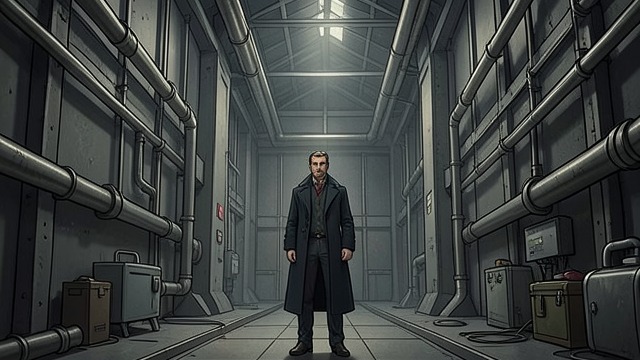
Life in the Steel Cave
Efficiency as shelter
New York City is an enormous enclosed system of residences, kitchens, transit, factories, and utilities. Its organization supports a vast population by reducing waste and coordinating everyday life.
Dependence as danger
The same efficiency leaves the City unable to survive a serious interruption for long. Baley has always treated the structure as normal, even though its stability is fragile.
Urban comfort is also a form of dependence.
Crowds as Nature
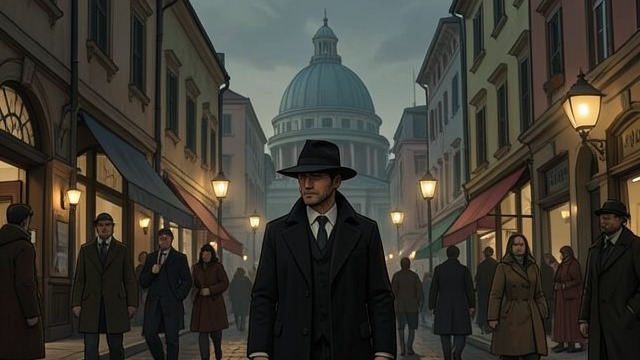
Crowds as Nature
Familiar density
Baley moves through expressways, standees, lights, and crowds with lifelong skill. The City’s constant noise and proximity feel like the natural conditions of human existence.
A different scale
The low domes of Spacetown contrast with the City’s towers. At first Baley treats the contrast as a matter of cultural preference rather than an invitation to reconsider his own environment.
The familiar setting begins to look like a choice, not a necessity.
Exposure to Open Air

Exposure to Open Air
A physical ordeal
Baley must shower, surrender his blaster, and pass through strict admission procedures before reaching the open landscape. Sunlight and unconditioned air feel alarming after life indoors.
A sensory discovery
Later, the City’s smell becomes newly noticeable to him. Open air has altered his perception, revealing features of home that he previously could not detect.
The change is small but begins a profound reassessment.
Fastolfe’s Warning
Fastolfe’s Warning
Fragile urban systems
Fastolfe describes the City’s dependence on continuous water, food, power, and air supplies. A civilization designed for efficiency has become vulnerable to small failures.
A disputed remedy
He proposes that Earth use emigration and colonization to escape its closed system. Baley resists the idea, but the argument follows him back into the City.
The open world becomes a practical alternative as well as an emotional challenge.
The Road Beyond Earth
The Road Beyond Earth
A changed imagination
Baley no longer dismisses colonization as impossible. He argues for it to Clousarr and later asks Daneel to imagine Bentley among future emigrants.
Beyond nostalgia
The old slogan of returning to the soil is redirected toward other planets. The resolution does not reject Earth’s past; it gives the longing for open space a future-oriented destination.
Baley’s imagination has begun to travel beyond the City.
During Baley’s expressway reflections
During Baley’s first journey to Spacetown
During Baley’s admission to Spacetown
During the conversation in the Spacetown dome
Near the conclusion, after the Sarton case is solved
